Emojis, stickers, gifs: are your online emotions for real?


Expressing what we are saying, thinking or feeling has always been an important part of communication and in an increasingly digital world, getting it right is a growing priority for people and companies. Though it is coming at a cost.
As one who loves to bring a blend of my personality into my texting, I customize every emoji and ensure I have the right stickers to respond with. I’m always picking and adding to my arsenal, and I pride myself on making stickers of all my classmates (I know they secretly love them). Though gifs aren’t my cup of tea.
The important thing for many of us is finding a better way to express ourselves when texting either through emojis, stickers or reactions. Developing a personal brand so to speak. Social media platforms are constantly adapting to make this possible for us. Think of the bitmoji of snapchat amongst others.
Why the need for expression?
Remember communication is more nonverbal than the actual words being said or in this case typed. Various estimates put the value of the nonverbal portion of communication to 70 percent or 93 percent in some cases. Nonverbal implying: tone, pitch, body language and facial expressions.
For in person interaction this makes sense but, when engaging online there is no real substitute for some of these aspects like body language or pitch. However, innovation is often born out of frustration and people found a way around this to make the experience more enjoyable.
Conversations without emojis or something feel a bit ‘dry’ to me. Let’s be honest, using a laughing emoji or sticker feels a lot more real than typing the words ‘hahaha’ or that is just my take on it?

How did we get here?
According to the Independent the average age children in Europe receive a phone is between 9 and 11 years old and worldwide according to the World Economic Forum over 5.4 billion people had at least one mobile phone in 2022. Actually, the number of mobile phones in use surpassed the world population, reaching 8.58 billion according to the World Economic Forum in that same year.
With so many phones and other devices in circulation, internet becoming faster and more reliable staying in touch with people has become increasingly simple to do and more convenient for many.
This was worsened by the lockdown in Covid, where people had only their devices to communicate with each other and express themselves. Classes were held online, and it became common place to have meetings online or do work remotely even after lockdown.
Where does that leave us?
Remember when I said communication is largely nonverbal. Online interactions have greatly affected social skills. People are more comfortable communicating online than they are in person. Have you ever had wonderful energy with a person online but when you meet in person it is disappointing?
People are having an increasingly shorter social battery for in person interactions and the one that concerns me the most is a mismatch between what people are texting about and how they are really feeling or what is seen on their face.

The genuineness of our emotions and reactions have lost meaning, when we need to have a medium expressing how we feel. They come too quickly and leave just as fast. Thus, the doom scrolling to find more and more funny videos to give us a taste. Our baseline dopamine is constantly being affected by this phenomenon.
Now that you’re done reading this, put down the device and interact with people, your social battery might last longer than you think, and you might be surprised you’re better in person than you thought.
Text: Daniel Trevor Kimera
Featured image on homepage: Keira Burton via Pexels
Related content

Have you ever heard about tomato fights? Night of Radishes? Black Day? Some countries take traditions to another level. Explore…
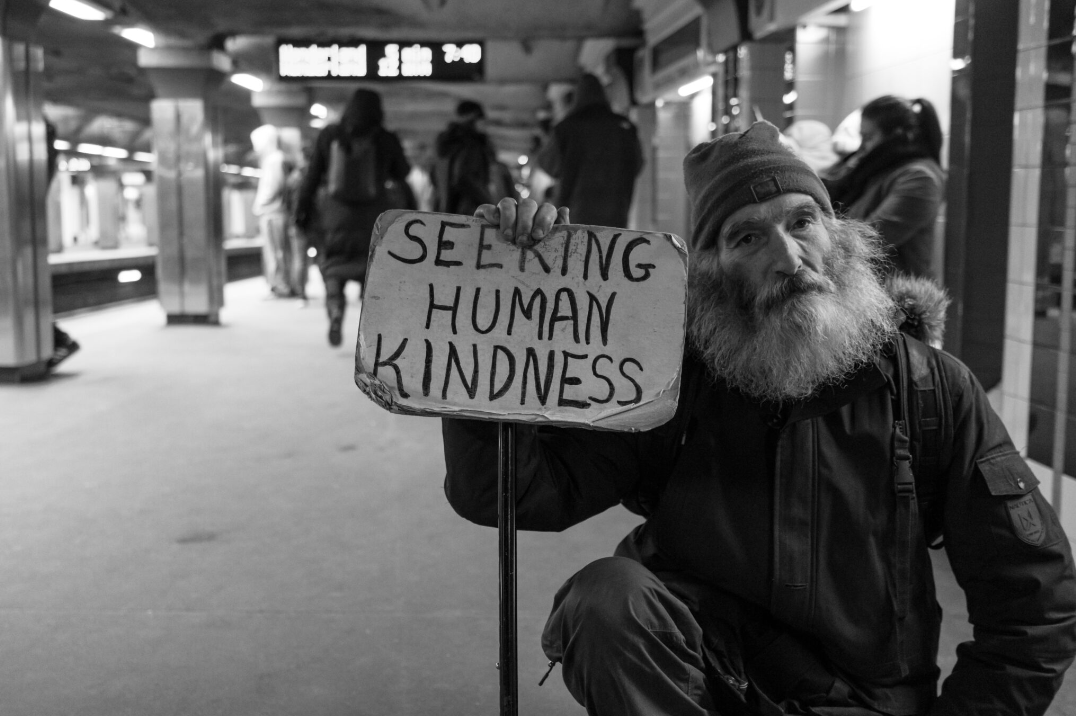
Wanneer een man in de trein om een kleine steun komt vragen, lijkt niemand iets te kunnen missen. Zijn we…

We humans love to complain, it’s what we do best. On the train, at the restaurant, at work. Everywhere we…