“We also only see the bad Roma” – An insight into a community that has been misrepresented for generations

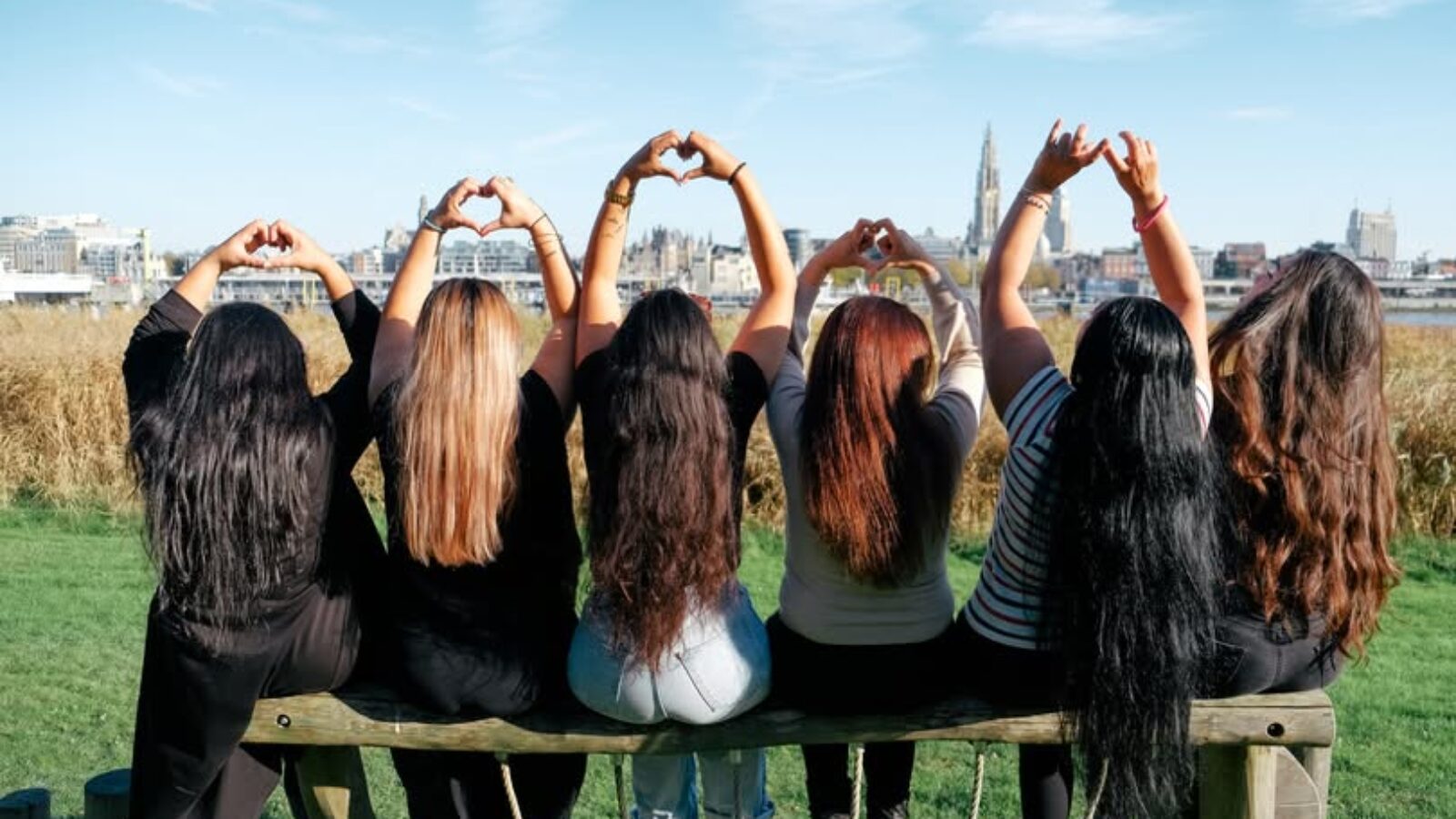
“[Saying you’re Roma] is sort of like coming out,” Merima Mehmeti tells me. “When you say it without being ready, it’s going to ruin you.” She isn’t joking or exaggerating. All over Europe, Roma children sit in classrooms where teachers refuse to look at them, and classmates won’t sit next to them. Despite having a degree, they often can’t find work and end up doing the jobs that no one else will.

Merima Mehmeti is part of Europe’s largest minority, the Romani people. She grew up in a village in Croatia, and today she lives in Antwerp with her three children and works as a Roma coach at CAW. Alongside her work, she’s an activist and runs a nonprofit organization with the goal of empowering Roma women.
Merima remembers beginning elementary school at six, not speaking the language. Her father had taught her two sentences, “I want to go to the toilet” and “This is my name,” and then she was thrown into it, having to learn a whole new language just to go to school. She remembers there being three or four other Roma kids in her class, and every year fewer of them returned. They stopped going to school because they didn’t feel welcome. “I was the only one in my class at the end,” she tells me and continues, “the stigma and discrimination was definitely present, even with the teachers. When they were teaching, they didn’t even look at you.” She often felt that they only wanted to teach “their own” kids and not the Roma kids.
At home she also witnessed the unfair treatment of her father for being Roma. Despite being a trained locksmith, he was never able to find work in his profession because nobody wanted Roma as employees, so he had to work as a garbage collector.

Merima and her family are not alone in this. According to the EU’s Roma survey of 2024, 14 percent of Roma have felt discriminated against when in contact with schools, whether as a parent or a student. In fact, only 32 percent of children finish secondary education compared to 84 percent of the general population. They have an unemployment rate of 46 percent due mainly to exclusion from the job market, and a total of 35 percent of Roma have experienced discrimination when trying to find housing. The European Union is working to help the Roma community, and most of these numbers are already an improvement on previous surveys. But despite the willingness of the Roma people, the prejudice continues to follow them.
“They think we’re dumb. Simply not smart enough to do things on their level,” Merima says when asked how she thinks non-Roma people view her community. She tells me how her colleagues reacted with disbelief when she was appointed team coach for a project, saying she couldn’t do it. “Overall, they just don’t think we’re capable.” She describes to me how she’s been met with comments about Roma people always needing help and even how people don’t think they can take care of their kids. She tells me about the feeling of constantly being looked down on, it’s the feeling that you don’t belong, “like you’re not even human.”
The generational exclusion and mockery of their culture have led to the community becoming more closed off and strict. Merima explains that to be accepted, you must adhere to what she calls the “Roma frame.” You don’t date casually, you find a good husband, you’re a good wife, raise well-behaved children who go to school, own a house and a car, and place family above everything. They want to change the standards. It’s frowned upon to step out of the frame. You might even risk exclusion, not being welcome in your own community or your own home. “[When I was a teenager] I tried to go out of the frame.” Merima tells me. She describes how she didn’t feel free to do what she wanted. She couldn’t go to a party or have a relationship, she simply didn’t feel that she had a free life. “I didn’t want to be Roma,” she says. But as she has gotten older, she understands it more and more.
“For me, family is what matters, everything comes second.” Those are Merimas words, while trying to explain what being Roma means to her. For her it’s all about family and community. Traditionally, school hasn’t been a big priority in the Roma community, but that is changing, kids going to school and getting an education is becoming increasingly normalized. But even with this change, the value of family above all is still present: “I will never prioritize school over their well-being. If there’s a problem with them, they stay home. The person and their feelings come first, and the school comes second.” That is Merima’s view on it.
She also describes how the Roma community is more flexible than you’d think. They have their rules and their “frame.” There are Muslim Roma, Christian Roma, Jehovah Roma, and people regularly convert religions. On top of this they share one language, Romani, but they also speak all kinds of different languages. Merima herself speaks five.
While Merima has found the strengths of her culture and sees how beautiful it can be, many young Roma people are still ashamed of it.
“[A lot of young people] don’t say they are Roma because they are afraid of discrimination and prejudices.”
Merima explains that in the Roma community there are no closed doors, everything is talked about, and everyone is included. The parents were discriminated against, and the children listened when the grownups talked. It’s a form of generational trauma and a harmful cycle.
“We also only see the bad Roma, the good Roma is not seen.” What Merima is saying is that many well-integrated and successful Roma people distance themselves from the community and keep quiet about being Roma. “So, when even we, Roma people, don’t see the good Roma people, how can others see the good?” The argument is simple. When there’s no good representation of Roma people in their everyday lives, in the media, and in their workplaces and schools, how will the old stereotypes and prejudice ever change? And more importantly, how is the young generation of Roma supposed to feel pride in their culture?
Through her NGO Bahtale Romnja, Merima works to help Roma women and girls appreciate their culture.


She tells me the story of a few young people who were ashamed and didn’t want to admit publicly that they are Roma. Merima advised them to go to a seminar in Brussels that discussed what it means to be Roma. At first, they didn’t want to go, they would have to tell people that they are Roma, and they didn’t want that. But the good thing about those seminars is that they are open to anyone, not just Roma people. So they went, and they told people they weren’t Roma. “I told them, when you get back, we will speak,” Merima says.
“They came back with a Roma flag. They came back saying they are Roma, being proud of it.”
At the seminar, they had the chance to talk about how it was to be Roma, and they saw successful Roma people. They saw that they are not just people who are asking for money or stealing. That is the work Merima lives for. She tries to empower her community to find pride in their culture, one step at a time. “I have a teen at home who doesn’t want to say he is Roma, and I understand. I also don’t want to force it,” she says and continues, “You have to say it when you’re ready for it. You have to be confident when you say it.”
Text: Catharina Waterstradt
Related content

De Belgische festivalzomer komt dichterbij! Deze acts van Belgische bodem moet je gezien hebben.
De verkiezingen van 2024 komen eraan. Er zijn opnieuw veel jongeren die voor de eerste keer hun stem mogen uitbrengen.…
De verkiezingen van 2024 komen eraan. Kristof Calvo, federaal parlementslid van Groen, geeft antwoord op de vragen waarmee jongeren zitten.